How To Outsource Link Building (For Agencies & Teams)
Daniel Trick
Jul 31, 2026
13 min read

Link building is something you can do in-house. But should you?
Maybe not.
Building links is hard. It takes time. And even when you land a couple of placements, they might not move the needle on long-term results. You can spend weeks going back and forth with bloggers and still watch your rankings sit exactly where they were, leaving you or your clients stuck in the depths of the search results.
Fortunately, there’s an easier way: outsourced link building. An external agency does the work, freeing you up to focus on your core operations.
This post covers why you should outsource link building, what to look for in a provider, what to run away from, and how to measure whether it’s working. Here’s what you need to know.
Do Links Still Matter in 2026?
Fair question, and worth answering before the rest.
Google has spent years turning the dial down. At PubCon in 2023, Google’s Gary Illyes said links haven’t been a top-three ranking signal for some time, and that it’s possible to rank without them. Anyone still selling links as the ranking factor is working from a 2015 playbook.
Less important than they were is still a long way from unimportant, though. When Ahrefs disavowed all external links to three of their best-performing blog posts as an experiment, those pages lost performance. Links still carry weight, alongside a much longer list of other signals.
There’s a second reason to keep funding them, too. The pages your links elevate are the pages AI search systems find, crawl and cite, so links now feed a discovery layer that didn’t exist when this post was first written.
So links matter, but they aren’t the whole story any more. Be sceptical of any provider who says otherwise.
Why Should Agencies and Teams Outsource Their Link Building?
There are many reasons companies outsource link building. There are also good reasons to keep it in-house, but more on that another time…
Here are six of the strongest arguments for outsourcing:
1. Get Results Faster
How long does it take to see meaningful movement in search results?
The standard answer is “three to six months.”
But that assumes intentional, intensive work by people who do this every day. Done in-house, alongside everything else on your plate, it almost always takes considerably longer. Not because in-house teams are worse at it, but because link building is the first thing to slip when a client emergency lands.
Established link building agencies already have relationships with sites that publish. They aren’t starting outreach from a cold list every month, which is where most of the time goes.
2. Pay Less
This sounds counterintuitive, but outsourcing is usually cheaper than building the same capability internally.
If you want a serious in-house link building operation, you need to hire for it. In the US, a link building specialist averages around $67,000 a year on ZipRecruiter’s data, and Glassdoor’s mid-2026 figures for “SEO link building” roles put the median nearer $85,600, with a typical range of $64,000 to $119,000. In the UK, SEO specialist salaries sit somewhere around £28,000 to £36,000 depending on which aggregator you trust (Payscale says £27,514, Indeed says £35,677).
Salary is only part of the bill. On top, you’re paying for:
- Tooling: an Ahrefs or Semrush subscription at minimum
- Employment costs: employer NI or payroll taxes, pension contributions, holiday
- Ramp-up: a new hire isn’t productive in month one
- Single-point-of-failure risk: when they’re on leave or they resign, output stops
Compare that to buying placements as you need them. You’ll typically pay a fraction of a loaded salary for comparable output, with none of the fixed cost. And because established providers have existing publisher relationships, they can place work that a solo in-house hire would spend months building up to.
3. Get Consistent Results
Then there’s consistency. Good agencies have their processes down to a tee.
They understand that you need a mix of links from a range of genuinely relevant sites, not fifty placements from the same handful of blogs. They know what editors accept. And they know what a natural placement cadence looks like, rather than dumping 200 links in a month and creating a pattern.
Some providers also handle link maintenance: chasing placements that come down, and replacing them. Ask about it specifically, because it’s a different job from bad-link cleanup.
- Placement maintenance is useful. Sites go dark, get redesigned, or drop posts. A provider offering a replacement guarantee is absorbing a real risk for you.
- Toxic link cleanup and disavows are something else, and be sceptical if they’re sold as routine. Google’s guidance is that most sites never need the disavow tool. It’s for cases where you have a manual action, or you knowingly built bad links yourself. Providers pitching disavow work as standard hygiene are often selling a solution to a problem you don’t have.
4. Focus More On Your Core Activities
Outsourcing lets you focus on the work only you can do. Genuine link building is a full-time job: researching prospects, writing content that clears an editorial bar, sending and chasing outreach, managing relationships, and reporting on all of it.
Most teams can’t absorb that using existing staff. It’s simply too labour-intensive, and it’s the kind of work that expands to fill whatever time you give it.
Agencies solve this with specialisation. Different people handle prospecting, outreach, writing, client liaison and reporting. That’s also why their output doesn’t collapse when one person is unavailable.
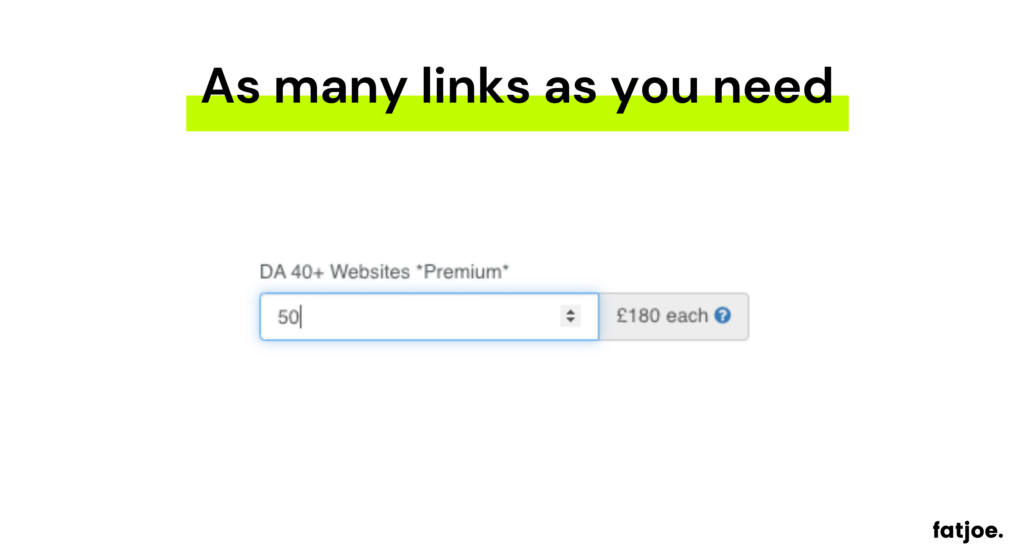
5. Get As Many Links As You Need, When You Need Them
Outsourcing also lets you scale up and down as your team or clients require, and demand for link building is lumpy.
You onboard three new clients in a month. A retailer needs a push before Black Friday. A client’s competitor launches a campaign and they want a response. None of that arrives on a smooth monthly curve, and a fixed in-house headcount is either idle in the slow months or overwhelmed in the busy ones.
Providers with flexible capacity absorb those peaks. If you need to double output for a quarter and halve it afterwards, that’s an order-size change rather than a hiring and redundancy cycle.
6. Avoid Spammy Links
Lastly, and perhaps most importantly, a good provider keeps you on the right side of Google’s spam policies. Reputable outfits maintain internal criteria specifically so their clients don’t end up in trouble.
This matters far more than it did when this post was first written, because Google’s enforcement changed shape in December 2022. That update was the first time Google applied SpamBrain, its AI spam-detection system, to links. And it applied to both sides of the transaction: sites buying links, and sites in the business of passing outgoing links.
The mechanism is the reason cheap links are such a bad deal. Where the older model was largely about penalties, the December 2022 update neutralises link credit. Google’s systems stop counting the link, and Google has stated that once credit is nullified this way, it can’t be recovered by cleaning things up afterwards. There’s no notification and nothing to appeal. You’ve paid for something that does nothing.
Google’s spam policies remain explicit about what counts as a link scheme, including:
- Buying or selling links that pass ranking credit
- Excessive link exchanges, or partner pages that exist only for cross-linking
- Automated programs or services that create links to your site
- Large-scale article marketing or guest posting campaigns with optimised anchor text
Since 2022 the policies have widened further. March 2024 restructured them to add scaled content abuse and expired domain abuse. And the site reputation abuse policy (launched May 2024, then widened in November 2024 to apply regardless of whether the host publisher was involved) triggered manual actions against major publishers, including Forbes Advisor and CNN Underscored. Whole directories were deindexed.
That enforcement changed what a good placement looks like, which matters a great deal for how you vet a provider.
What To Look For When Outsourcing
Outsourcing brings real benefits, but only with the right partner. Cowboy services that charge premium fees for lacklustre work will burn your budget and can land you in trouble. Here are the five things to check before you commit:
1. Examples Of Work
Providers who are proud of their work will show you it. If there’s nothing on the website, ask for a portfolio of placements for clients in a similar space.
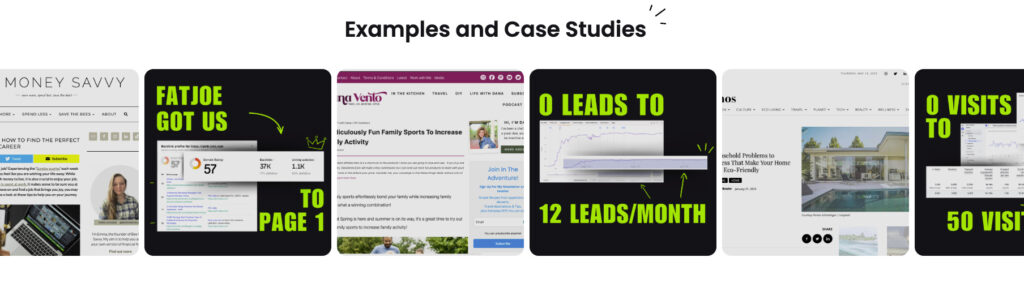
When you get it, don’t just count the links. Open them, and check:
- Is the page live, and is the link still in it? A surprising number of portfolio links aren’t.
- Does the site have a real audience? Look for engagement, a coherent editorial identity, evidence anyone reads it.
- Is the placement on-topic? For the publication as well as for your client.
- Would an editor have accepted this? Read the article as a reader, not as an SEO. If it exists only to carry a link, that’s as obvious to Google as it is to you.
- Is the site a farm? Any topic accepted, no editorial voice, no sign of a real reader. Those are the sites that got neutralised in 2022 and are still getting neutralised now.
A refusal to provide any examples is a red flag. It usually means the placements won’t survive the checks above.
One piece of older advice worth reversing: don’t use household names as your quality benchmark. It used to be reasonable to hold up Forbes or similar as the aspiration. Since the site reputation abuse enforcement, a subdirectory bolted onto a famous domain is closer to a liability. A mid-sized publication with genuine readers in your client’s niche is the better placement, and arguably always was.
2. Rapid Delivery
Teams and agencies that outsource need predictable turnarounds. Waiting weeks with no visibility interrupts the whole programme.
Ask for a specific number, and ask what it’s measured from. As a benchmark, our own Blogger Outreach and Niche Edits run to a 14-day turnaround.
Whoever you use, ask about workflow:
- How is the content produced, and by whom?
- How many writers and outreach staff are there? Avoid anyone dependent on one or two people.
- Can they handle a large order without turnaround collapsing?
- Is there a pre-approval step, and how long does it add?
On that last point, some of the strongest providers don’t offer pre-approval, because they trust their own standards and it keeps costs and turnaround down. Others build it in. Neither is automatically better. Just know which you’re buying, and make sure your client expectations match.
3. Reasonable Prices
Bargain-basement providers are a dime a dozen. You get what you pay for.
Fifty guest post links for $100 sounds great. At $2 a link, work out what’s possible for $2. The answer is an automated placement on a site that exists to sell placements, which is the pattern SpamBrain was built to spot.
Reputable providers charge enough to cover genuine outreach and content that clears an editorial bar, and they work with clients who understand why. For reference, our link building services start from £60 per placement.
4. Unlimited Rewrites
Good writers still make mistakes, and the first draft won’t always match a client’s tone or a publication’s house style.
Providers who include content writing will often guarantee unlimited rewrites, meaning as many revision rounds as it takes. The better ones extend a guarantee to completed placements too, replacing links that come down. Ask specifically what the guarantee covers, for how long, and what voids it.
Budget providers typically won’t offer this, which puts the cost of every miss on you.
5. Positive Reviews
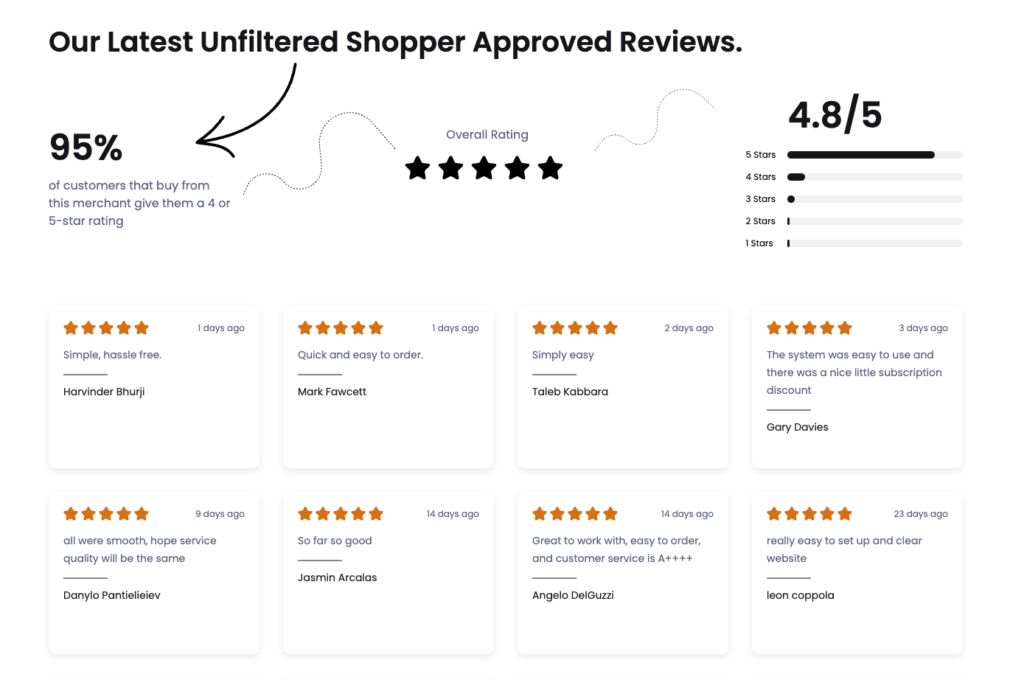
Look for independent feedback on platforms the provider doesn’t control. Trustpilot, Google, Shopper Approved, G2 and Clutch are the ones that matter in this vertical. (Ours sit on Shopper Approved.)
Read what reviewers actually say, because the score on its own tells you very little. Pay attention to reviews from teams that look like yours, and to how the provider responds to criticism.
Then ask for case studies showing work in your client’s vertical. Most reputable providers will have them.
What To Avoid With Outsourced Link Building
Not every provider is on the level, and it’s still a bit of a wild west out there. “Buyer beware” applies. Here are five things to steer clear of:
1. Overpromising
Be sceptical of anyone promising you the world. Guarantees are where the shady tactics hide, because the only way to guarantee a ranking is to manipulate one.
Specifically, walk away from:
- Guaranteed positions. Nobody controls Google’s index. Google itself warns against SEO providers who guarantee rankings.
- Guaranteed results in under three months. Rarely credible.
- Big promises wrapped in dense terms and conditions. That’s a provider building cover for the moment the results don’t arrive.
2. Writers Who Can’t Meet The Publication’s Standard
To cut costs, some providers pay writing rates that make quality impossible. What comes back is content no real editor would accept: thin, generic, obviously produced to carry a link, and increasingly just unedited AI output at volume.
Interrogate the editorial standard and the process. Where the writer happens to live tells you nothing useful. Ask:
- What’s the writing and editing workflow? Is there an editor at all?
- Is AI used, and if so, how is output reviewed before it goes out?
- Can you see three unedited samples in your client’s niche?
- Do writers understand the market they’re writing for, including its references, regulations and reader expectations?
Plenty of excellent writers work outside the US and UK, and native-language expertise is essential for international campaigns. It’s the whole basis of a service like Multilingual Outreach, which relies on genuine local-language bloggers. What separates good work from bad is whether anyone is editing it, and whether the finished piece could stand on its own.
3. Quantity Over Quality
Steer clear of volume-first offers. A big number of links is tempting, especially for a new site, but it backfires: spam from low-quality pages doesn’t help, and a sudden unnatural spike is itself a pattern.
Don’t over-correct, though. High-quality sites with low third-party scores exist. It’s natural to earn links from sites that are new, niche, or just not SEO-savvy, and those are often the most credible placements you’ll get. Judge a site on whether it’s engaged in spammy behaviour, not on its score.
Speaking of scores: Domain Authority is Moz’s metric and Domain Rating is Ahrefs’. Neither is a Google ranking factor, and Google has confirmed as much repeatedly. They’re useful for filtering a prospect list quickly, and not much else. A provider optimising purely for DA is optimising your report instead of your rankings.
4. Black Hat Tactics
If you suspect a provider is using black hat tactics, walk away. The risk isn’t worth the reward. Be clear about what the risk actually is, though, because the two outcomes are different:
- Algorithmic devaluation is the common one. Your links stop counting, you aren’t told, and credit already lost can’t be recovered.
- A manual action is rarer. It appears in the Search Console Manual Actions report, and it is recoverable: you clean up the links and file a reconsideration request. Painful and slow, but not permanent.
Tactics to avoid:
- Spamming blog comments with unsolicited links
- Low-quality guest posts produced in minutes purely to host a link
- Private blog networks, meaning groups of sites under common ownership, often built on expired domains
- Cloaking, or serving a link-stuffed page to crawlers and something different to visitors
- Buying placements on high-authority domains that amount to site reputation abuse
Rather than relying on instinct, run diligence. Ask directly whether PBNs are used, ask how sites are sourced, request live URLs and check them, and ask what happens if a placement is later devalued.
5. Micromanaging The Agency
Finally, resist the urge to direct every decision. It drives up cost and stress, and with a good partner it’s unnecessary.
That said, trusting a provider doesn’t mean not looking. Review placements, hold them to their guarantees, and ask questions when something looks off.
How To Track Link Building Results
Tracking results tells you whether you’re getting a return. But what should you measure?
1. Growth In Referring Domains
Tools like Ahrefs or Semrush will show growth in referring domains, meaning the number of distinct sites linking to yours. Referring domains matter more than total link count, since fifty links from one site is one relationship, not fifty.
Watch the trend over months, and be wary of sudden spikes.
2. Rankings For Your Target Keywords
Use a rank tracker to monitor where your pages sit. Our free FatRank keyword rank checker, available as an app and a Chrome extension, will check any page’s position by country, which is handy for spot checks and prospecting. For ongoing monitoring, a dedicated tracker like Ahrefs’ or Semrush’s is the better fit.
Look for steady improvement over time. Be suspicious of dramatic jumps within days. That’s often the signature of tactics you didn’t sign up for.
Track a range of keywords, not just your money terms. And bear in mind that rank tracking is a noisier measure than it used to be. Personalisation, local packs and AI Overviews all mean “position 3” isn’t the fixed thing it once was.
3. Organic Traffic Growth
Organic traffic is the outcome that matters. Two tools, answering different questions:
- Google Search Console is the one most link building reports under-use. It shows impressions, clicks, average position and query-level data straight from Google, plus a Links report for your backlink profile as Google sees it. For assessing link building specifically, start here.
- Google Analytics 4 shows what visitors do once they arrive: sessions, engagement, conversions, revenue. Note that this is GA4, not the old Universal Analytics. UA stopped processing data on 1 July 2023, and from July 2024 the properties and all historical data were deleted outright. GA4’s event-based model reports differently, so don’t compare pre-2023 numbers with today’s like for like.
Expect three to twelve months for link building to move traffic meaningfully. If you see a step change in days, audit the tactics.
4. Relevance Of Placements
Relevance matters. Links from contextually related pages are worth more than links from unrelated ones. But Google publishes no “relevance score,” and there’s no metric you can pull, so this is a manual review rather than a number.
Any reputable provider will send you the URL of every placement. Actually open them, and check:
- Is the linking page on a topic connected to yours?
- Does the link sit in the body content, where a reader might follow it?
- Does the anchor text read naturally, or has an exact-match commercial phrase been jammed in?
- Would a human reader find the link useful?
If something doesn’t pass, go back to the provider and ask for a rewrite or removal. That’s what the guarantee is for.
5. AI Search Visibility
This one didn’t exist when this post was first written, and it’s now the fastest-changing part of off-page measurement.
When Ahrefs analysed 75,000 brands to see which factors correlate with appearing in Google’s AI Overviews, the top three were all off-site brand signals, and backlinks weren’t among them:
| Factor | Correlation with AI Overview visibility |
| Brand web mentions | 0.664 |
| Branded anchors | 0.527 |
| Brand search volume | 0.392 |
| Backlinks | 0.218 |
Brand mentions correlated roughly three times more strongly than backlinks. The spread across the sample tells you more than the coefficient does: brands in the top quartile for web mentions averaged around 169 AI Overview mentions, more than ten times the next quartile down, while the bottom half barely registered at all.
Treat that with some caution. Ahrefs published the correlation-is-not-causation warning themselves, and most people quoting 0.664 quietly drop it. Strong brands attract mentions and get cited, so the mentions may be a symptom as much as a cause. And none of it means links stopped mattering, since links still drive the rankings that determine which pages these systems find, crawl and consider citable.
The practical implication is that off-page work now has two outputs: links, and mentions that may carry no link at all. A provider still selling links alone is only covering half of it. That’s the thinking behind services like Brand Mentions, Community Mentions and Digital PR.
To track it, Ahrefs’ Brand Radar and Semrush’s AI visibility tooling both monitor brand presence across AI platforms. A manual prompt log works too: run your top buyer questions through the major assistants weekly and record who gets cited. It costs nothing and is more informative than you’d expect.
6. Return On Investment
Lastly, measure ROI. It should be positive: you should make more from link building than you spend on it.
There are two approaches:
Direct. Attribute revenue to the pages you’re building links to. GA4 and Search Console together will get you most of the way. This is the more rigorous method and the harder one, since organic rarely gets sole credit for a conversion.
Holistic. Add up the effects and compare them with the cost:
- Growth in referring domains and ranking positions
- Increases in organic traffic and conversions
- Referral traffic from the placements themselves, which is often overlooked and directly measurable
- Brand mentions and AI citations earned
- Improved standing in the niche
One thing to leave off that list: don’t count “higher Domain Authority” as a return. It’s a third-party estimate, not a business outcome.
Good providers generate progress reports automatically, so the number-crunching should be light. Just be sure the report tracks outcomes you care about.
What To Do Next
Now you know what to look for, what to avoid, and how to measure it. Time to start outsourcing your link building.
Remember: start slow and build from there. It’s far easier to scale up when something’s working than to recover from a devaluation because you went too hard, too fast.
Become a Pro at SEO
Join 65,000 others and learn the secrets to SEO success with our weekly blog posts.